 As a side event with the 9th Paris Peace Forum – the 10th anniversary of the Foreign Ministries Science and Advice Technology Network (FMSTAN) was celebrated on 9 November 2026 with a symposium (Reinventing Science Diplomacy in a Changing World) at the United Nations Educational, Scientific and Cultural Organization (UNESCO) headquarters in Paris, France.
The 10th anniversary of FMSTAN preceded the World Day of Science for Peace and Development on November 10th, involving the 4th Chief Science Advisors Roundtable (CSAR) at UNESCO. These celebrations followed the Global Ministerial Dialogue on Science Diplomacy in March 2025 also at UNESCO, which is awakening science diplomacy as a crosscutting mandate of the United Nations.
FMSTAN (originally named the Foreign Ministers Science and Technology Advisor Network), was initiated in 2016 with the United States (Dr. Vaughan Turekian), United Kingdom (Professor Robin Grimes), New Zealand (Professor Sir Peter Gluckman) and Japan (Professor Teruo Kishi) under the umbrella of the International Network for Governmental Science Advice (INGSA). In a seminal article, these four Science & Technology (S&T) advisors to foreign ministers shared their insights about Science Diplomacy: A Pragmatic Perspective from the Inside. Today, FMSTAN includes S&T advisors to foreign ministries from more than forty nations.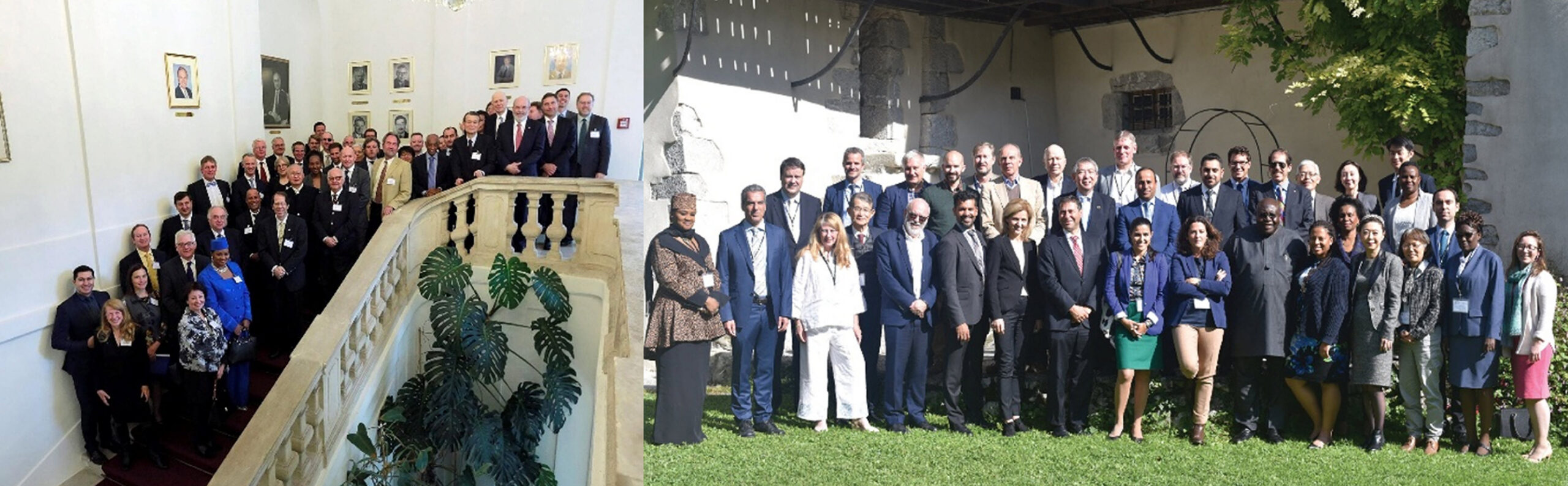
Following the FMSTAN meeting at the U.S. National Academy of Sciences in February 2016, S&T advisors were invited to the International Institute for Applied Systems Analysis (IIASA) in Laxenburg near Vienna, Austria, in October 2016, to contribute to the 1st International Dialogue on Science and Technology Advice in Foreign Ministries. The 2nd International Dialogue on Science and Technology Advice in Foreign Ministries was convened in September 2017 at the Tufts European Center in Talloires, France. Both of these international dialogues were chaired and co-convened by Professor Paul Arthur Berkman from the outside of foreign ministries.
At these initial FMSTAN dialogues, representatives from more than two dozen foreign ministries revealed their national responsibilities include urgencies at both a security times scale that is immediate as well as at a sustainability time scale that operates across generations. This framework about a ‘continuum of urgencies’ inspired the theory of informed decisionmaking, which was published in 2017 initially in Science, as an inquiry-driven framework to build common interests among allies and adversaries alike with inclusion (who, what, when, where, why and how). A key case study for this theory was the first formal dialogue between the North Atlantic Treaty Organization (NATO) and Russia regarding security in the Arctic that had been convened at the University of Cambridge in 2010.
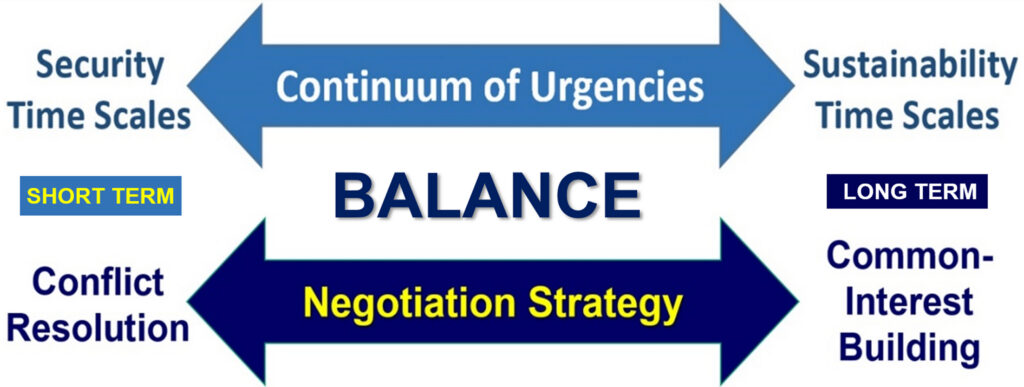
Reality with nations is they operate in view of national interests first and foremost, which is inherently exclusive. In contrast, science diplomacy from the outside has the capacity to be inclusive as a transdisciplinary process to build common interests across our world. Together, science diplomacy from inside and outside of government creates the foundation to balance national interests and common interests for the benefit of all on Earth across generations.
Such synergy was heralded at the height of the Cold War with the 1959 Antarctic Treaty, which became the first nuclear arms agreement with “matters of common interest” as the guiding light for our shared survival as a globally-interconnected civilization a decade after the Second World War. The 1959 Antarctic Treaty emerged directly from the International Geophysical Year (IGY) 1957-1958 with science on a planetary scale, setting in motion science diplomacy as an international, interdisciplinary and inclusive process “forever… for peaceful purpose only”.
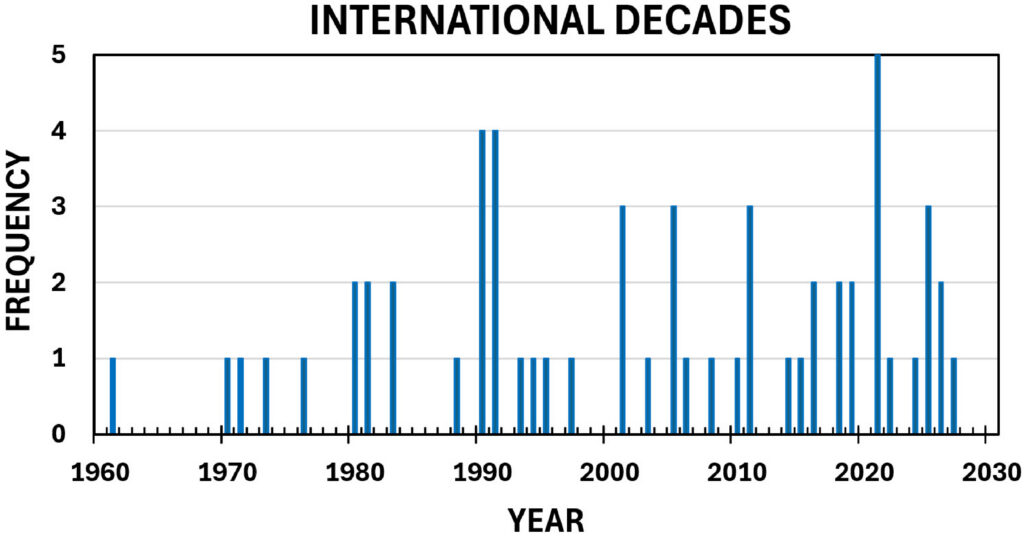
Also following directly from the IGY, the first International Decade was designated by the United Nations in 1961. The development and elaboration of International Decades subsequently is an ongoing test of informed decisionmaking that has yet to be falsified, revealing that humankind is progressively operating across a ‘continuum of urgencies’ over longer periods as a civilization on a planetary scale.
CODA: Upon returning from Paris to Boston on November 13th (Friday), the air space over the United States was shut down due to communications problems with air-traffic control – further revealing our personal-to-planetary challenge to make informed decisions with inclusive considerations and evidence short to long term.

